

Lysine is an organic chemical compound — an amino acid and fundamental building block of proteins. It belongs to the group of essential amino acids: the body cannot synthesise it independently, which means it must be obtained through food or supplementation. Its deficiency can result in serious health consequences across multiple systems, from immune function to bone health to skin condition. Despite being relatively unfamiliar compared to other amino acids, lysine is involved in an impressive range of physiological processes that make it worth understanding.
What Does Lysine Do in the Body?
Lysine's biological roles are concentrated in a few interconnected areas, each with practical relevance:
Protein Synthesis and Muscle Health
Lysine is a primary component of muscle protein and plays a key role in protein synthesis — the process by which the body builds and repairs tissues. For people engaged in regular training, particularly strength training, adequate lysine intake directly supports muscle mass development and the regeneration of damaged muscle fibres. It contributes to the repair of bones and connective tissue after mechanical stress or injury, making it relevant not only for athletes but for anyone recovering from physical trauma or surgery.
Collagen Formation
Lysine is essential for the biosynthesis of collagen, the most abundant structural protein in the body. It acts as a direct building block of collagen's triple helix structure and undergoes enzymatic modification (hydroxylation and cross-linking) that gives collagen its tensile strength and structural integrity. This function affects the quality and resilience of skin, tendons, cartilage, bones, teeth, and blood vessel walls — the full range of connective tissues. Our collagen supplements collection and bone, joint and cartilage collection include products that complement lysine's structural roles.
Calcium Absorption and Bone Health
Lysine facilitates the intestinal absorption of calcium and reduces urinary calcium excretion — a combination that supports bone mineralisation and may contribute to the prevention of osteoporosis. This function makes lysine particularly relevant for older adults, post-menopausal women, and people with elevated bone loss risk. The interaction with calcium absorption also explains lysine's relevance to dental health, as it supports the mineralisation of tooth enamel and the integrity of gum tissue.
L-Carnitine Production
Lysine is one of the two amino acid precursors (alongside methionine) required for the biosynthesis of L-carnitine — a compound central to fatty acid transport into mitochondria for energy production. Carnitine is necessary for the oxidation of long-chain fatty acids and plays an important role in fat metabolism and energy availability. This pathway connects lysine to weight management and athletic performance: adequate lysine supports normal carnitine synthesis, which in turn supports efficient fat utilisation. For people on low-lysine diets, carnitine synthesis can become limited even when dietary fat is adequate.
Immune Function and Antiviral Activity
Lysine has a well-established relationship with herpes simplex virus (HSV) recurrence. The virus requires arginine — another amino acid — for replication. Lysine competes with arginine for cellular uptake, and at higher intake levels, it effectively limits the arginine availability that the virus needs to replicate. Multiple clinical studies have confirmed that lysine supplementation at sufficient doses reduces the frequency, duration, and severity of cold sore outbreaks. This antiviral mechanism is specific to HSV replication and does not generalise to all viruses, but for the significant proportion of the European population carrying dormant HSV, it is a practically useful effect. Our immune system collection includes lysine alongside other immune-supportive compounds.
Lysine and Vitamin C: A Complementary Pair
Lysine and vitamin C are often supplemented together because both are required for collagen synthesis — and neither is produced by the body independently. Vitamin C is the co-factor for the hydroxylation of lysine and proline residues in procollagen, which is the biochemical step that produces the structural modifications needed for stable, cross-linked collagen. Without adequate vitamin C, even sufficient lysine cannot produce properly formed collagen. Conversely, without adequate lysine, vitamin C cannot drive collagen synthesis regardless of how much is available.
Both compounds also contribute to immune defence and the inhibition of viral spread, and both are required for the normal function of enzymes, hormones, and antibodies. Taking them together — either through food or supplementation — is therefore more effective than either alone. Our vitamin C collection includes options across standard and liposomal forms for pairing with lysine supplementation.
Signs of Lysine Deficiency
Because lysine is involved in so many processes, its deficiency produces a wide and sometimes non-specific symptom picture:
- Chronic fatigue and persistent low energy
- Irritability and difficulty concentrating
- Hair loss and poor nail condition
- Reduced immunity and increased susceptibility to infections
- Recurring cold sores (herpes simplex outbreaks)
- Poor wound healing and prolonged recovery from injury
- Anaemia — lysine deficiency can impair iron absorption and haemoglobin production
- Metabolic disturbances — particularly related to fat metabolism and energy production via the carnitine pathway
Food Sources of Lysine
Lysine is found predominantly in animal-derived foods, which is why vegetarians, vegans, and people on restrictive diets face elevated risk of deficiency. The richest dietary sources include:
- Meat — particularly red meat; beef, lamb, and pork are excellent sources
- Fish — cod, tuna, salmon, and most seafood
- Eggs — particularly the egg white
- Dairy products — cheese (especially hard cheese), milk, and yogurt
- Legumes — soya, beans, lentils, and chickpeas are among the richest plant-based sources
- Hemp seeds
- Almonds
- Potatoes and whole grain products — in smaller but still meaningful amounts
Grains and cereals in general are relatively low in lysine — it is the first limiting amino acid in wheat and most other grain proteins. This is why vegetarians and vegans who rely heavily on grain-based proteins should pay particular attention to their lysine intake from legumes and seeds, or consider supplementation. Our amino acids collection includes lysine alongside other essential amino acids.
Who May Benefit from Lysine Supplementation?
Lysine supplementation is most relevant for the following groups:
- Vegetarians and vegans — particularly those with limited legume intake
- People with recurring herpes simplex (cold sores) — therapeutic doses of 1000–3000 mg/day have clinical support for reducing outbreak frequency
- Athletes and people training intensively — elevated protein turnover increases lysine requirements; supports muscle synthesis and carnitine production
- Older adults — declining protein intake and absorption efficiency increase deficiency risk; calcium absorption support is particularly relevant
- People recovering from injuries, surgery, or illness — elevated lysine requirements for tissue repair and immune function
- People prone to skin problems including acne — lysine's role in immunity and its effect on arginine-dependent bacterial and viral activity may be relevant; however, evidence for acne specifically is limited and lysine should not be considered equivalent to prescribed antibiotic treatment


Now Foods
Now Foods Double Strength L-Lysine 1000 mg - 100 Tablets
Regular price €12.89Unit price€0.13 each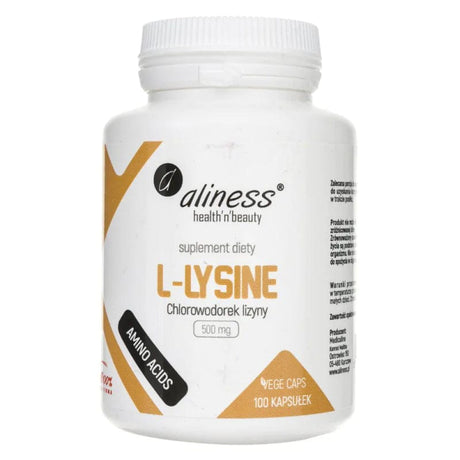


Aliness
Aliness L-Lysine (Hydrochloride) 500 mg - 100 Capsules
Regular price €8.19Unit price€0.08 each


This article is for information only and does not replace medical advice. If you have health concerns, are pregnant, breastfeeding or taking medication, consult a doctor or pharmacist. Dietary supplements are not a substitute for a varied diet.


